Monday, June 29, 2015

Cambridge Day


When one says “Cambridge Day” it can be easily assumed that it will be a day celebrating the historic and marvelous city of Cambridge in Great Britain. After all it is a city worth visiting. It is a university city in the town of Cambridgeshire, United Kingdom with a population of about 125 000 inhabitants. Cambridge is most widely known as the home of the University of Cambridge, founded in 1209 and consistently ranked one of the top five universities in the world. The university includes the renowned Cavendish Laboratory, King’s College Chapel and the Cambridge University Library.


However, at our school Cambridge Day is not filled with free food, English costumes, festival-like music. Rather it is filled with a bit of stress and competing among our most brave students. The day is packed with a practice test for First Certificate of English (FCE) exams.

Cambridge English: First, also known as First Certificate in English (FCE), is an upper-intermediate level qualification. It proves you can use everyday written and spoken English for work or study purposes. Every year, thousands of people who want to use English to improve their work and study prospects take the FCE exam. 


This year, for the first time, our school organized internal competition. A large group of students from all 4 years of gymnasium participated in the 5 hour tests. They listened, read, wrote and even answered grammar questions in the Use of English part of the test.


Among those that passed the tests, it is important to say that three students excelled in all four categories. Zdenek David, Radovan Opocensky and Tomas Reichtig all scored above 95%. Several additional students passed with Honors. 


Certainly, our Cambridge Day is going to become a yearly school tradition. 


Scotland at its best!


At the beginning of the month, our students took part in a week long expedition to Scotland, UK. A group of young and active teenagers and I took the chance to visit a new country and learn a bit about their history, culture and attempt to understand their local accent (which without a doubt was a challenge). 
                                                  
Upon arrival in Edinburgh, we quickly got on a double decker bus (the students immediately found comfortable seats on the top floor near the front- and yes, Wi-Fi was working there!) The simple yet comfortable hostel WEST END provided us accommodation for the first two nights while the students wandered around the city. The Edinburgh Castle was a hit. We spend 5 hours there! Unbelievable! Without a doubt the cherry of Edinburgh was climbing the Holyrod Park.


After two days, we were brave enough to take the local bus and travel 5 hours up north to a lovely little city Inverness. Inverness welcomed us with cold winds and a bit of drizzle here and there. This time we took the spirit of expedition all the way and camped at the BOUGHT camp and caravan park. 

It took us a while to get all the tents up especially since some of the students have never camped before but even those “newcomers” managed just fine.                                       The next four days we walked and walked and walked…. We managed to say “hi” to Nessie at the Loch Ness after a 30 km hike. We visited the Culloden Battle field and battle with old Jacobite swards and knives.                                                                                                                                                                                                                                      
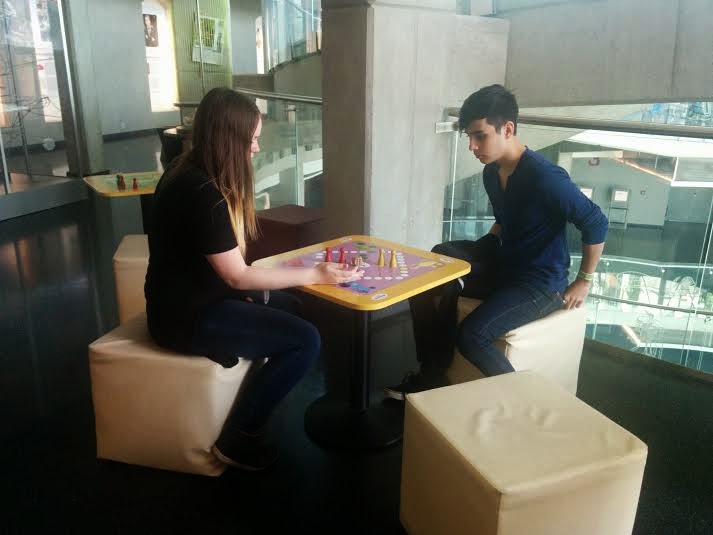
 We managed to visit the old ruin of the Urquhart Castle.                                                         Most importantly, the student on their own had the eager to explore the country side by renting bikes and exploring the seaside by visiting the dolphins. A small barbeque here and there, lots of games of Jenga and Chess in the tent- nothing but pure fun.

And in the end there was only one question we needed to answer: “where to go next?”


Monday, June 1, 2015

Benvido á Escocia ! Welcome to Scotland!

Within a day or so a group of our young students will have a chance to further expand their knowledge of foreign languages. In addition to practicing their English while travelling around Scotland, UK, and the students will notice something that most people don’t know even exists – the Scottish Gaelic.
Scottish Gaelic, sometimes also referred to as Gaelic, is a Celtic langugae native to Scotland.

The  2011 census of Scotland showed that a total of 57,375 people (1.1% of the Scottish population aged over three years old) in Scotland could speak Gaelic at that time, The census results indicate a decline of 1,275 Gaelic speakers from 2001. A total of 87,056 people in 2011 reported having some facility with Gaelic compared to 93,282 people in 2001, a decline of 6,226. Despite this decline, revival efforts exist and the number of speakers of the language under age 20 has increased.
Scottish Gaelic is not an official language of the European Union or the United Kingdom. However, it is classed as an Indigenous language under the European Charter of Regional or Minority Languages, which the British government has ratified, and the Gaelic Languages (Scotland) Act 2005 established a language development body, Bòrd na Gàidhlig, "with a view to securing the status of the Gaelic language as an official language of Scotland.

Outside Scotland, a dialect known as Canadian Caelic is spoken in parts of Eastern Canada. In 2011, there were approximately 1,500 Gaelic-speakers in Canada with the vast majority in the province of Nova Scotia. About 350 Canadians in 2011 claimed Gaelic as their "mother tongue".

Friday, May 22, 2015

IQ LANDIA Liberec

So, a few weeks back I got the idea of organizing a field trip for my students. Of course, over the year they have done many trip with different teachers hence this time around I asked them specifically "where do you want to go?"

Given that there is a much larger proportion of men in the class the most common answer was "lazer game" or "paint ball"... after much debate the vote came down and the trip to Liberec to IQ Landia was planned. 

IQ Landia, a modern science center with a 3D planetarium and hundreds of original exhits was fantastic. The students entered an enchanting world of science and technology, amazing experiements and smart entertainement. Students had a chance to chat with the first and only humanoid robot in the Czech Republic, experience genuine astronaut training, witness a fire storm and danicing lightning and learn about all the functions of the human body and the world around us. For 8 hr their curiosity was satisfied.  


HONZA AND ZAJA trying to hide...


DAN being creative


GEOUP SIMLE


Our students are so clever 


Lunch time... (most important)_

JARDA taking a bubble shower


ZAJA and Marketa doing their best...

Friday, April 24, 2015

Expedition to Scotland

Our annual expedition to Scotland is approaching and once again we are in full speed of preparation… Places we will visit: 

Edinburgh 
is the capital city of Scotland since at least the 15th century, Edinburgh is home to the Scottish Parliament and the seat of the monarchy in Scotland. 


Edinburgh Castle
 is a historic fortress which dominates the skyline of the city. Archaeologists have established human occupation of the rock since the Iron Age (2nd century AD), although the nature of the early settlement is unclear. There has been a royal castle on the rock since at least the reign of David I in the 12th century. From the 15th century the castle's residential role declined, and by the 17th century it was principally used as military barracks with a large garrison. Edinburgh Castle was involved in many historical conflicts from the Wars of Scottish Independence in the 14th century to the Jacobite Rising of 1745.


OLD TOWN and The Royal Mile
is the name given to streets forming the main thoroughfare of the Old Town. The area has preserved much of its medieval street plan.  Together with the 18th-century New Town, it forms part of a protected UNESCO WORLD HERITAGE Site. 


Castle Rock 
a volcanic plug in the middle of Edinburgh. The rock is estimated to have risen some 350 million years ago.


Inverness 
is a city in the northern Scotiush Highlands.


The Battle of Culloden was the final confrontation of the 1745 Jacobite Rising on 16 April 1746. The conflict was the last batle fought on British soil forever making Scotland part of the British Empire.


Cawdor Castle 
is set 16 km east of Inverness. The castle is built around a 15th-century tower house, with substantial additions in later centuries. 

Loch Ness 
is a large, deep, freshwater loch extending for approximately 37 km.  Loch Ness is best known for alleged sightings of the famous “Nessie”.
Urquhart Castle 
sits beside Loch Ness. The castle ruins date from the 13th to the 16th centuries, though built on the site of an early medieval fortification. Founded in the 13th century. 

And many many more.......


International Experience

Without a doubt keeping students interested in learning English and paying attention can be sometimes a bit of a challenge J hence, when opportunity arises that someone else can do the job I jump to the occasion.

Such occasion came up last month when our school was visited by a group of 25 or so students from Turkey. They were divided into 3 smaller groups and attended each of the classes. Immediately, it became obvious that the Czech students had a higher level of English than the Turkish students and some students worried about “how will they communicate” issue. I eagerly matched a Czech student with a Turkish student and asked them to find out 10 things about each other. Of course, I got questions “but how when they don’t know the words”… I smiled and said “Just try”.

Results: Fantastic! A bit of google translator, a pen and paper and 45 minutes went by in a flash. The students got their 10 facts and even managed to learn some Turkish words including some very important school items like bir kalem and kâğıt, or even otobüs, okul and their favorite ödev!


Thank you to our Turkish students for having the courage to talk to us….


 Great reason to use a phone in class - google translator (at least that is what they told me) 


Who said learning can't be fun- smile! 


Tomas is learning to pronounce Turkish words - should I add them to the next test? :-)


and a little bit of grammar....


Samual - determined to get the info....

Wednesday, April 1, 2015

To whip or not to whip- that is the question


Today I asked the students to tell me the difference between Czech Easter and American Easter. I assumed it was a semi important topic as there is a slight chance that such a questions might pop up on the maturita exam… oh and tomorrow is the first day of Easter holiday for the school.


Result: lots of “hmmmm’s”. So after 40 minutes of a discussion we came up with this:

We (Czech Republic)
  • ·         Celebrate it on Monday (an extra free day is nice)
  • ·         Color eggs (nice and fun for kids)
  • ·         Eat eggs (not as much fun if you are eating them for a week after)
  • ·         Whip girls (…hmmm…no comment on this)
  • ·         Drink shots of vodka while visiting neighbors (…hmmm… I hope they don’t drive afterwards)

YOU (United States)
  • ·         Celebrate on Sunday ( no extra free days)
  • ·         Search for eggs (lots of extra work)
  • ·         No eating of eggs (the ones left by Easter Bunny are plastic)
  • ·         No whipping (probably a rule about harassment)
  • ·         No drinking (it’s a Sunday and most states forbid the sale of alcohol)
  • ·         Oh, there is the Easter Bunny who brings mini gifts and well… is imaginary…

So conclusion… The students will be more than glad to go whip some girls and drink on Monday rather than come to school! 


Happy Easter Holidays